A woman who has built a devoted yoga practice, sometimes over years, wants to know whether it is doing enough for her as she moves through her forties and beyond. Is it protecting her muscles. Is it protecting her bones. Or is she missing something she cannot quite name.
My honest answer is that yoga is extraordinarily valuable, and for most women it is not the complete picture when it comes to preserving muscle and bone as we age. That is not a criticism of yoga. It is simply an invitation to see it clearly, for what it does beautifully and for what it was never designed to do on its own.
Different forms of movement create different adaptations in the body. When the goal is specifically to preserve muscle and give bone enough stimulus to stay strong, most women benefit from adding resistance training alongside their yoga practice. You do not need to give up what you love. You simply need to add what it does not always provide.
What Yoga Does Exceptionally Well
Before I get into what yoga may be missing, I want to honour how much it gives us, because the list is long.
Yoga can build functional strength. Anyone who has held Warrior II, Chair Pose or a slow Chaturanga knows this is not simply stretching. Many poses ask the muscles to generate force while holding a position, which is a form of strength called isometric. For someone moving from a sedentary life into a regular practice, that demand alone can create real gains.
Yoga is weight bearing. Standing poses ask the legs and hips to support the body against gravity. Planks and Downward Facing Dog place load through the arms, shoulders and wrists. This matters because bone responds to mechanical stress, and weight bearing movement is one piece of protecting bone health. But there is a distinction worth sitting with. Weight bearing does not automatically mean an activity provides the strongest possible stimulus for building or preserving bone density. The body adapts to what is familiar. As you grow stronger and more skilled in your practice, the same pose asks less of you. That is a sign of progress, and it is also a sign that your body may eventually need something more.
Yoga supports balance, and I have come to think of this as one of its quietest, most important gifts. Standing on one leg in Tree Pose or Warrior III asks the brain, muscles and sensory systems to keep talking to each other about where the body is in space. Balance matters more as we age because bone health was never only about density. It is also about not falling in the first place, and about having the coordination to catch yourself when you do trip.
Yoga preserves mobility. Strength without the ability to move through your day with ease is not especially useful. A thoughtful practice takes the joints through varied ranges of motion, and the ability to reach, rotate, squat, bend and get down onto the floor and back up again is a real measure of independence, not a small thing to take for granted.
Yoga offers something resistance training was never built to provide. Breath, attention and movement come together in a way that can genuinely support the nervous system. For women carrying demanding careers, caregiving, hormonal transitions and disrupted sleep, this matters as much as the physical benefits. Exercise should not only make us stronger. Some of it should help us feel more at home in our own bodies, and yoga does that in a way little else does.
So Where Does Yoga Fall Short
Here is where I want to be honest rather than reassuring.
If your goals include preserving muscle, building real strength and protecting bone as you age, most yoga practices do not offer enough progressive resistance on their own. Progressive resistance simply means gradually asking your muscles to do more than they are used to. A heavier dumbbell. A stronger band. A more demanding variation of a movement. The body receives the message that the task in front of it is genuinely hard, and it adapts by getting stronger.
Bone responds to mechanical loading in a similar way. Research in postmenopausal women points to resistance training as an effective approach for improving or maintaining bone mineral density, though the right program will always depend on the individual in front of you.
Yoga certainly creates load. What it does not reliably offer is a systematic way of increasing that load over time. There are only so many ways to make your own body heavier.
The Missing Piece: Two Strength Sessions
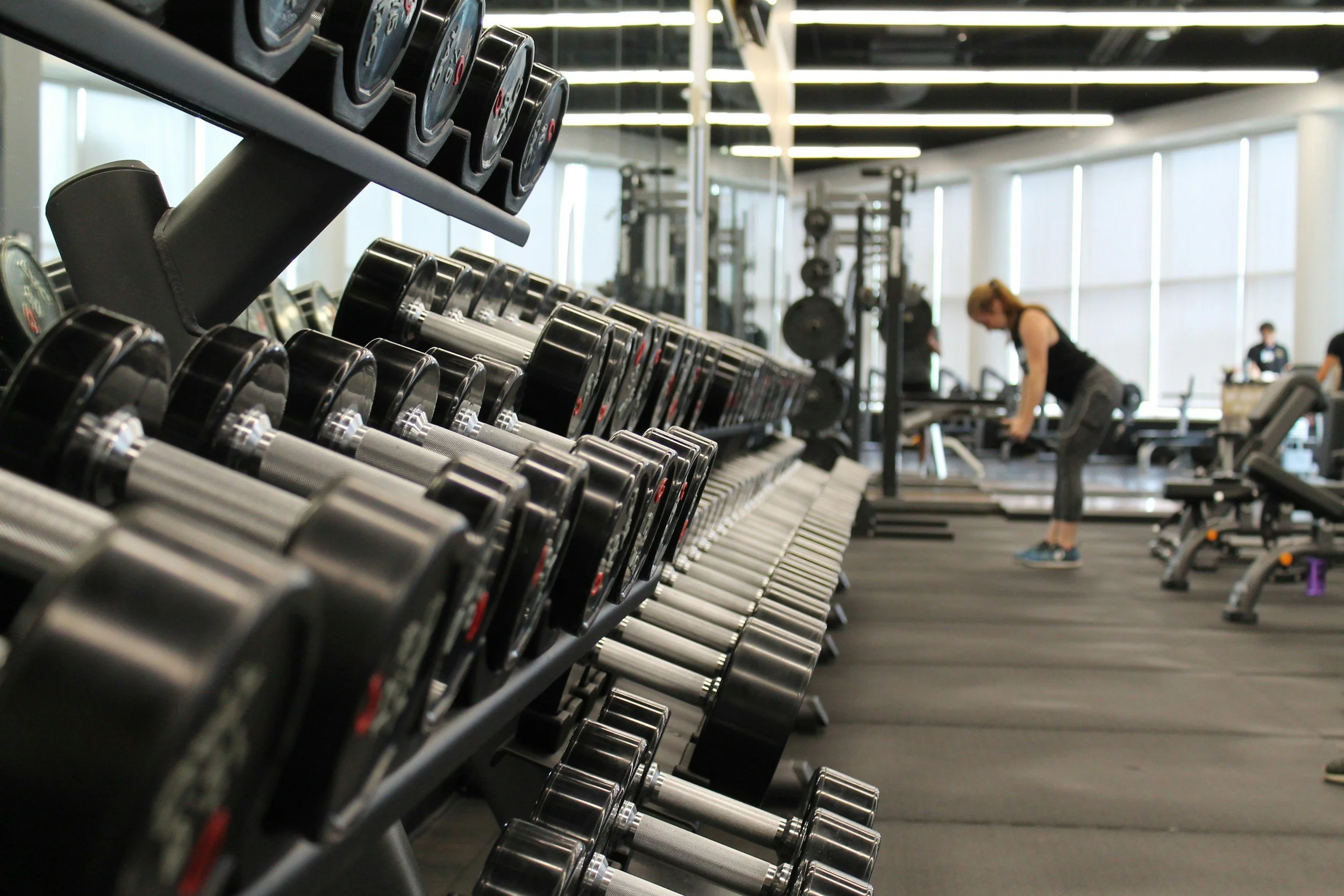
For most women who already practice yoga consistently, the answer does not need to be complicated. Keep the yoga. Add two resistance sessions a week.
These sessions do not need to take over your life. A simple strength program can be built around the fundamental ways the human body moves. Squatting. Hinging at the hips. Pushing. Pulling. Carrying weight. Stabilizing.
In practice, that might look like squats or sit to stands for the legs, a deadlift style movement for the hips and the muscles along the back of the body, rows for the upper back, presses or push ups for the chest and arms, and a loaded carry to bring it all together. The part that actually matters is progression. Over time the work should ask more of you, not stay comfortable forever. You might start with body weight, move to a band or a light dumbbell, and keep adding resistance as your body adapts. For most women without significant medical or orthopedic concerns, strength training should eventually feel like strength training, not another gentle movement practice wearing a different name.
You Can Strength Train at Home
You do not need a gym membership for this. A pair of adjustable dumbbells and a few resistance bands go a long way. A simple session might include a squat, a Romanian deadlift, a row, an overhead or floor press and a loaded carry. Choose a resistance that lets you move with good technique while the final few repetitions genuinely challenge you, then keep increasing it as you get stronger. Two focused sessions a week is enough to complement your yoga practice without turning your week into a second job.
How to Make Your Yoga Practice More Strength Focused
You can also raise the strength demand within the practice you already have. Slow your transitions instead of relying on momentum to carry you between poses. Hold your standing poses a little longer. Repeat controlled transitions between Plank and Downward Facing Dog rather than moving through them quickly. Choose the more demanding variation of a pose when it is right for your body, and notice when something that used to challenge you no longer does. That ease is worth celebrating, and it may also be your body telling you it is ready for more.
What I would not recommend is pushing yoga to become increasingly extreme in an attempt to turn it into weightlifting. Yoga does not need to become resistance training. Let it be what it is, and let strength training do what it does particularly well.
What About Bone Health Specifically
Bone is living tissue. It is being broken down and rebuilt continuously, and mechanical loading is one of the signals that tells the body to keep rebuilding it strong. This becomes especially important around and after menopause, when declining estrogen can speed up bone loss.
For that reason, the major bone health organizations recommend a combination of weight bearing movement and muscle strengthening exercise, and depending on your health, some appropriate impact based activity as well. Walking, hiking and stair climbing all provide weight bearing stimulus, while resistance training offers another kind of mechanical challenge and builds the muscles that support and move the skeleton at the same time.
Yoga fits beautifully into this picture. It simply should not have to carry the whole picture by itself.
A More Complete Week of Movement
A well rounded week does not need to be elaborate. For a woman who loves her yoga practice, it might look something like two or three yoga sessions, two focused strength sessions, regular walking or hiking, and enough rest for the body to actually adapt rather than being constantly asked to perform. Some of these naturally overlap, and that is fine. The goal was never a perfect schedule. It is simply giving your body the variety it needs across mobility, strength, balance, load, cardiovascular movement and genuine recovery. No single form of exercise has to carry all of that on its own.
A Note for Women With Osteopenia or Osteoporosis
If you have been diagnosed with osteopenia or osteoporosis, have had a fragility fracture, or carry other significant medical or orthopedic concerns, this all becomes more individual. Certain yoga movements, particularly some forms of loaded or repeated spinal flexion, may not be appropriate if you are at higher risk of a vertebral fracture. That does not mean giving up yoga. It means working with a physician, physical therapist or a qualified movement professional who understands bone health and can help you adapt your practice safely. The same care applies to resistance training. The goal was never simply to lift more. It is to create enough stimulus to grow stronger without taking on unnecessary risk.
Yoga Is Part of the Answer, Not the Entire Answer
We love yoga at Ritual, and because we love it, we do not need to pretend it does everything. It offers something rare. Strength and softness in the same practice. Movement and stillness. Effort alongside real awareness. It builds functional strength, supports mobility and balance, and creates the kind of moments where the nervous system is finally allowed to stop rushing.
Those are real benefits, and women also deserve straightforward information about what their bodies actually need as they age. For most of us, that means bringing progressive resistance training alongside the practices we already love, not replacing one with the other.
At Ritual, our approach was never about convincing women that a single modality holds all the answers. It is about helping women understand their own bodies and build a rhythm of care that is sustainable for the whole person. For the women I work with in Rancho Santa Fe, Encinitas and across North County San Diego, that rhythm might include yoga, strength work, walking, hiking, recovery, massage, Ayurveda informed care, infrared sauna, and simply having somewhere to slow down.
Frequently Asked Questions
Is yoga considered strength training?
Some forms of yoga genuinely challenge and strengthen muscles, particularly practices built around standing poses, planks, holds and controlled bodyweight movement. That said, yoga generally does not offer the same progressive loading that dedicated resistance training does.
How many days a week should women strength train?
General bone health guidance commonly points to muscle strengthening exercise at least two days a week, though your ideal frequency depends on your health, training experience, goals and recovery.
Can yoga help prevent osteoporosis?
Yoga can absolutely support a bone healthy lifestyle through weight bearing movement, strength, balance and fall prevention. It should not be treated as a standalone strategy for preventing osteoporosis. Resistance training, appropriate weight bearing activity, nutrition and your individual medical picture all matter too.
Do I need a gym to build strength?
No. Dumbbells, resistance bands and bodyweight exercises can build an effective program at home. What matters most is that the resistance keeps increasing as you get stronger.
The information shared in this post is intended for educational and informational purposes only and does not constitute medical advice, diagnosis, or treatment. The content reflects the holistic wellness philosophy of Ritual Wellness Center and is not a substitute for professional medical care. Always consult with a qualified healthcare provider regarding any health concerns, symptoms, or before making changes to your wellness routine. Individual experiences vary, and what is shared here is not intended to replace the personalized guidance of your doctor or licensed healthcare professional.