I want to answer this question honestly rather than enthusiastically, because I think you deserve a straight answer. Yes, meditation helps with menopause. The research is clear and increasingly robust. But how it helps, and what kind of meditation produces the most meaningful results, is more nuanced than most wellness content acknowledges.
What the Clinical Research Found
A large clinical study examining the relationship between mindfulness and menopausal symptoms found that women with higher mindfulness scores reported significantly fewer and less severe menopausal symptoms across multiple domains. Irritability, anxiety, and depression were all meaningfully reduced. Sleep quality improved. The subjective experience of hot flashes became less distressing and easier to navigate.
A separate body of research on mindfulness-based stress reduction in perimenopausal and menopausal women found meaningful improvements in perceived stress, anxiety, sleep quality, and overall quality of life. These weren't marginal effects. Women who completed MBSR programs reported changes in their menopausal experience that they described as genuinely significant.
Which Symptoms Improve Most
The symptom categories most consistently improved by meditation practice in perimenopausal and menopausal women are mood-related, anxiety, irritability, and low mood, and sleep quality. The mechanism is not mysterious. Meditation reduces cortisol, increases GABA and serotonin, and progressively strengthens the prefrontal cortex's regulatory capacity over the limbic system. In simpler terms, it builds the brain's capacity to respond rather than react. For women whose nervous systems are in a state of perimenopause-driven dysregulation, this is a fundamental change in how daily experience feels.
Why Menopause Is Actually a Good Time to Start
Here's the thing the research suggests but rarely says explicitly: perimenopause creates a strong motivation to develop inner resources that were easy to skip before. Many of the women I work with across Rancho Santa Fe, Del Mar, Fairbanks Ranch, and La Jolla who find their way to meditation during perimenopause describe it as the beginning of a relationship with their inner life that they hadn't expected and don't want to give up. The symptoms brought them to the practice. The practice showed them something about themselves that the symptoms never could.
How to Start With Five to Ten Minutes
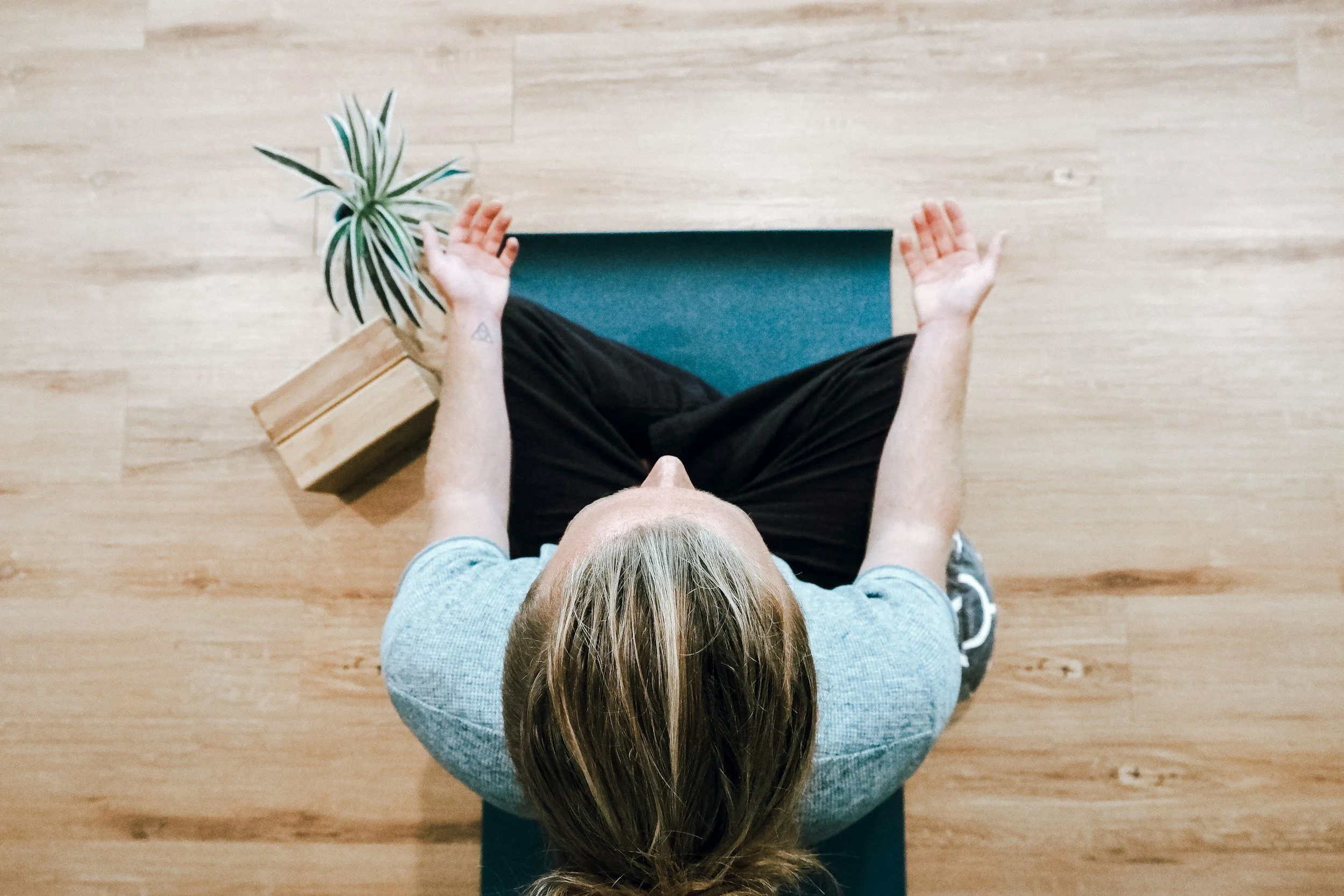
The research does not require an hour of meditation per day to produce meaningful results. Studies showing significant symptom improvement have used practices as short as ten to twenty minutes daily. Begin by finding a comfortable seated position. Close your eyes or soften your gaze. Set a timer for five minutes. Bring your attention to the sensation of breathing, not controlling the breath, just noticing it. When your mind wanders, and it will, simply return your attention to the breath without judgment. That's the entire practice.
The mind wandering and the return of attention is not a failure. It is the practice. Women in Encinitas, Carlsbad, Solana Beach, and Rancho Bernardo who began with five minutes and gradually built to fifteen or twenty consistently describe a shift in their capacity to remain present under stress that they didn't anticipate and now wouldn't trade.
What Ritual's Guided Meditation Offers
Starting a solo meditation practice can be genuinely difficult, particularly during perimenopause when the mind is often more scattered and restless than usual. At Ritual Wellness Center in Rancho Santa Fe, our guided meditation sessions remove the pressure of sitting with an untrained mind alone. You are led, supported, and held in a space designed for exactly this kind of inward turning.
Frequently Asked Questions
What type of meditation is best for menopause symptoms?
Mindfulness-based meditation and body scan practices have the strongest research support for menopausal symptom reduction. Yoga nidra, a form of guided meditation that produces a deeply restorative state, is particularly beneficial for sleep and nervous system regulation.
How long before meditation helps with menopause?
Meaningful improvements in mood, anxiety, and sleep are typically reported after six to eight weeks of consistent daily practice. Some women notice shifts in how they respond to stress within the first two to three weeks.
I've tried to meditate before and couldn't. Is it worth trying again?
The belief that you can't meditate because your mind is too busy is the single most common meditation misconception. A busy mind is not an obstacle to meditation. It is the material you work with. A guided practice in a supportive environment like Ritual's can completely change your experience of what meditation actually is.
Can meditation reduce hot flash frequency?
The research suggests that meditation reduces the distress and perceived severity of hot flashes more than their raw frequency. For frequency reduction, paced breathwork and yoga have somewhat stronger evidence. Used together, they address hot flashes from multiple angles simultaneously.
Meditation is not a cure for perimenopause. But it is one of the few practices that changes how the whole experience feels, from the inside out. And sometimes that is the most meaningful thing of all.
At Ritual Wellness Center in Rancho Santa Fe, we'd love to introduce you to a practice that might surprise you. We're here whenever you're ready.
The information shared in this post is intended for educational and informational purposes only and does not constitute medical advice, diagnosis, or treatment. The content reflects the holistic wellness philosophy of Ritual Wellness Center and is not a substitute for professional medical care. Always consult with a qualified healthcare provider regarding any health concerns, symptoms, or before making changes to your wellness routine. Individual experiences vary, and what is shared here is not intended to replace the personalized guidance of your doctor or licensed healthcare professional.